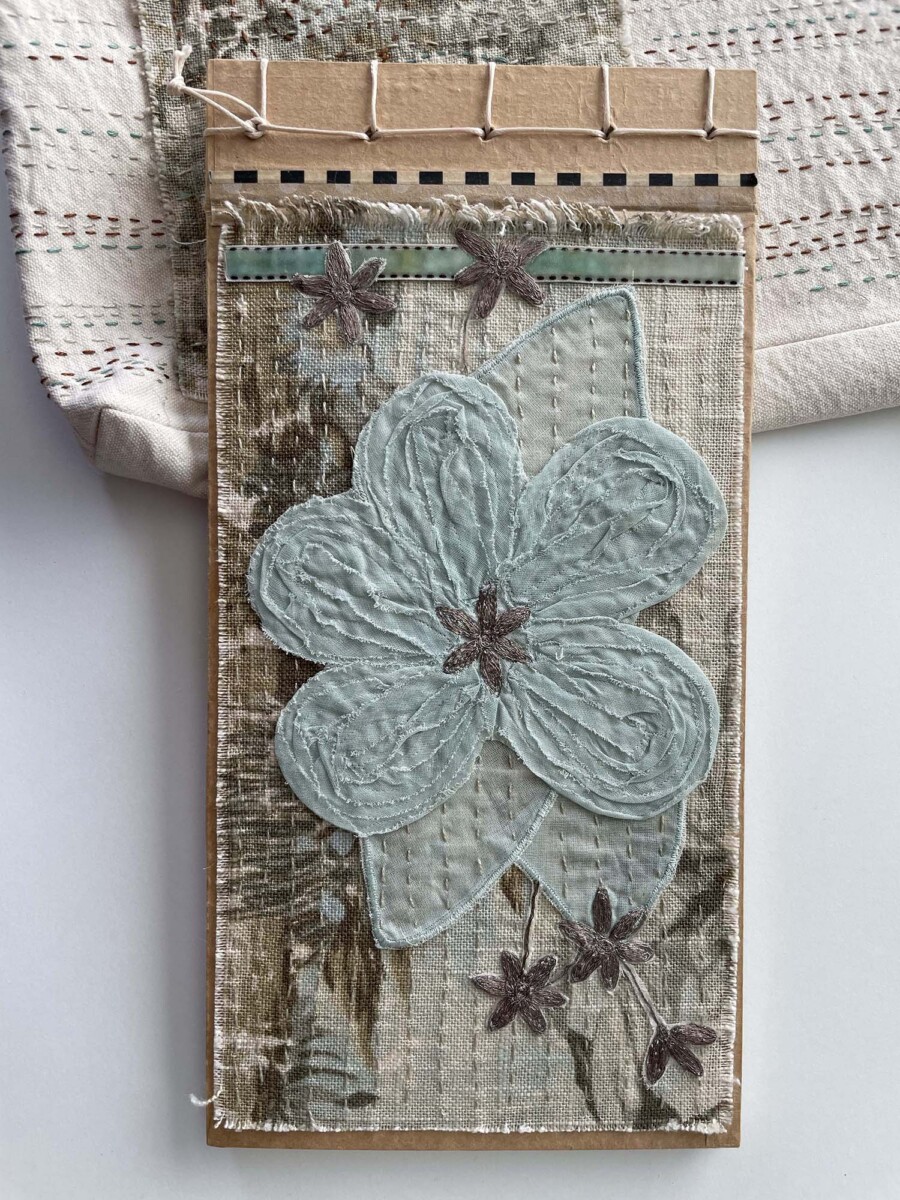
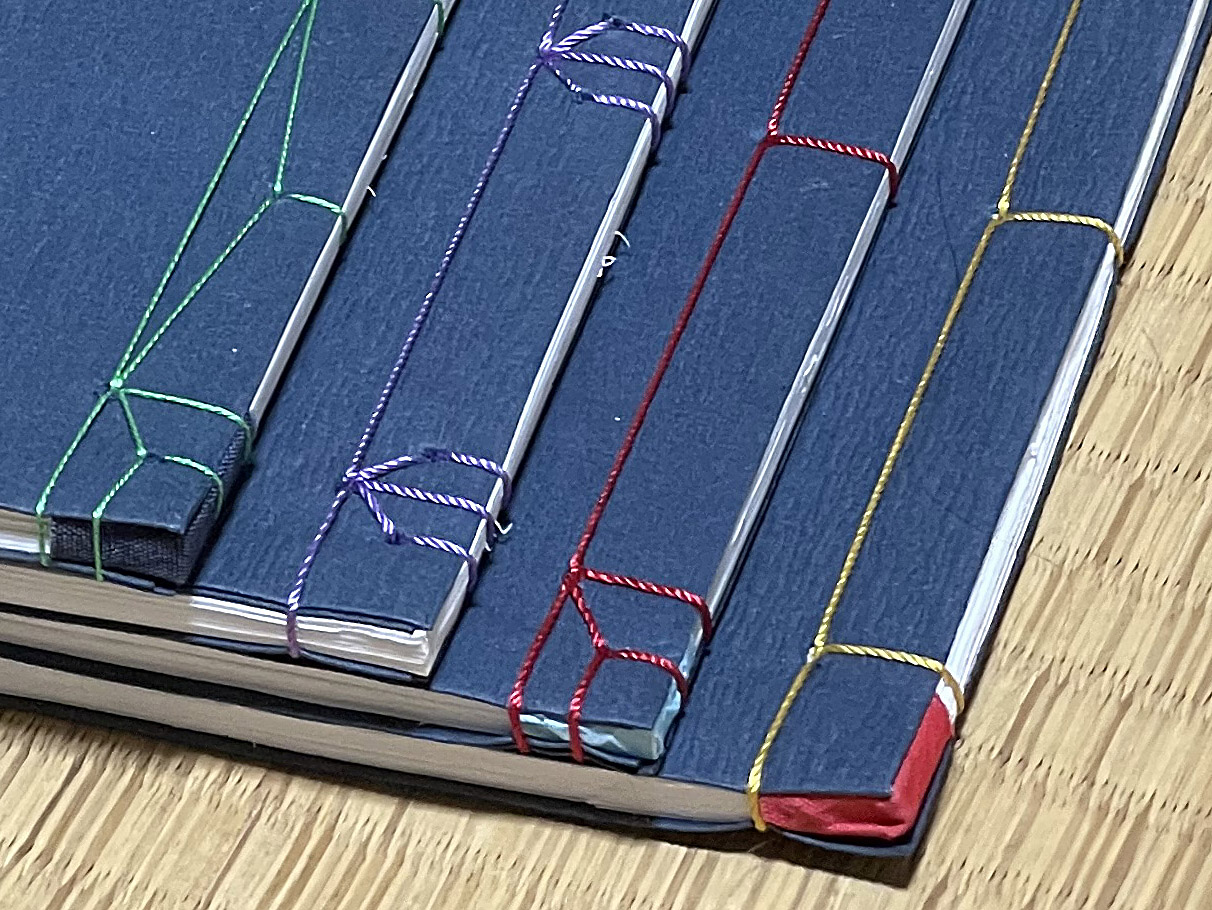
During this one-day workshop, students will learn how to create traditional Japanese stab-bound books from beginning to finish, using traditional Japanese materials. The instructor will bring materials from Japan for this workshop (paper and covers). We will cover up to four basic bindings: Yotsume Toji (Four-Hole Binding), Kikko Toji (Tortoise Shell), Asa-no-ha Toji (Hemp Leaf), and Koki Toji (Noble Binding).
Continue ReadingCategory: 1-Day
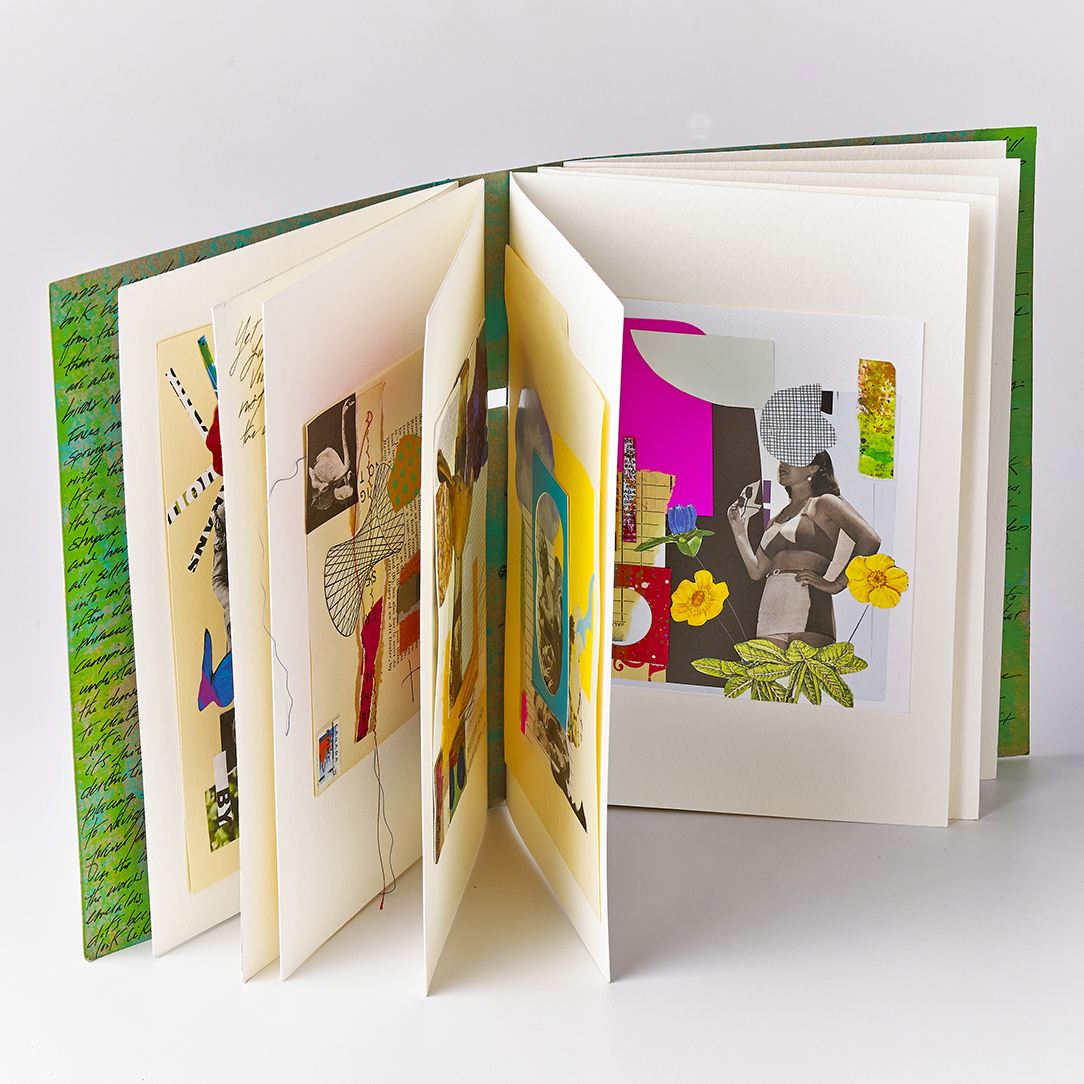
Rosemary Rae: Collage Boot Camp
In this Collage Boot Camp we will dive into the hands-on creation of mixed-media collages, integrating text using a variety of ephemera, papers, acrylic paint, and other markmaking tools. Discover your artistic voice and learn about color theory and how to create strong compositions.
Continue ReadingAnne Sobbota: Curiously Organized—Conversations with Design and Flow
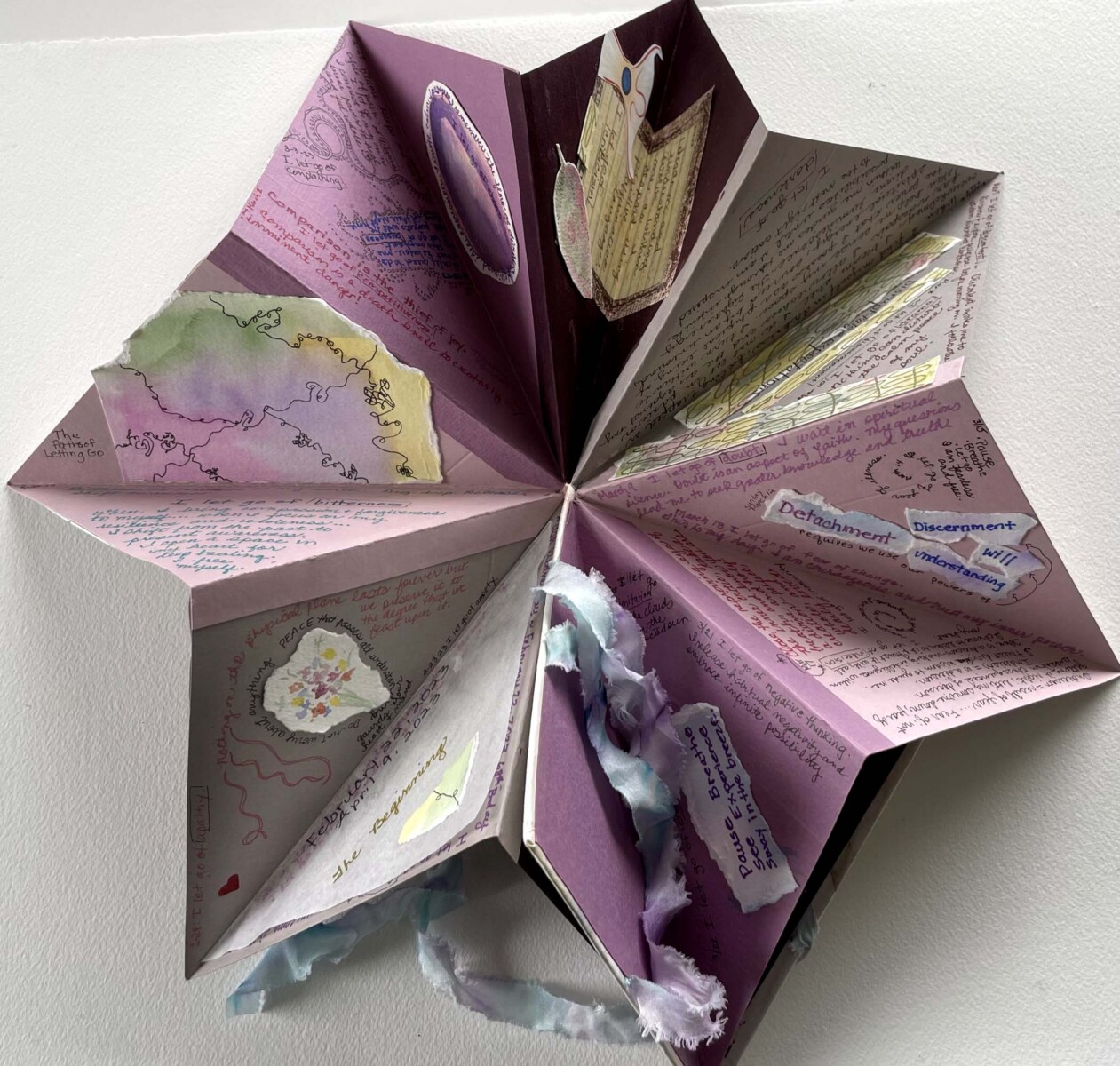
Emphasizing design and flow, this workshop is focused on book structure as a process to facilitate awareness of how artist’s marks, on paper and textiles, reflect their unique voice when shared. Through choices of arrangement (marks, color, cuts, folds, and embellishments), creativity becomes curiosity organized and each element that is carefully placed works to achieve impact and spark communication.
Continue ReadingAnne Sobbota: Curious Visions—Illuminating Hidden Inspirations
Activities in this workshop include a range of techniques designed to engage the imagination through color and discovery of hidden imagery. Mediums used range from watercolor to alcohol, and acrylic inks on different paper surfaces, including unique eco-prints and Yupo papers.
Continue ReadingRosemary Rae: Festival Flag Book
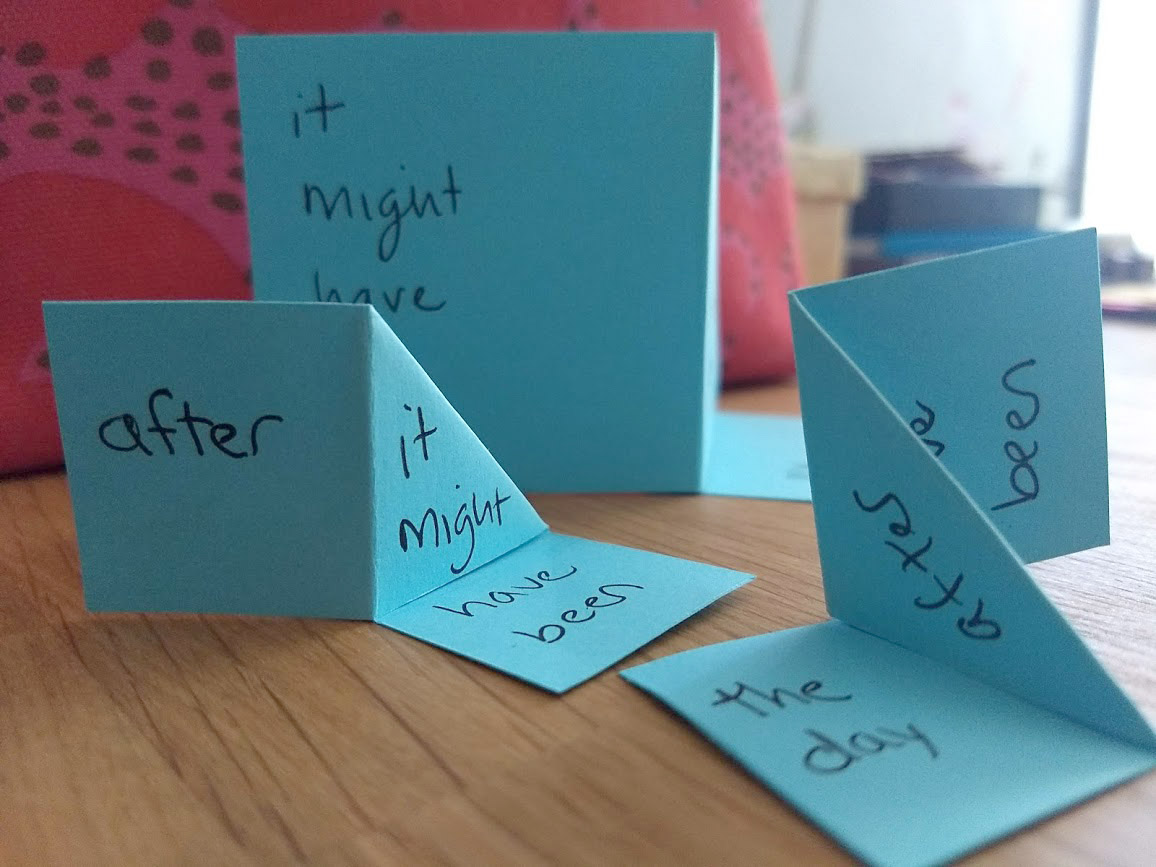
Gather found type, numerals, tickets and random images! This book is an easy and fun flag book structure mounted between two hard covers. Paint the covers or cover with decorative paper. Use found typography to create a paper festival and add a bit of collage, stars, and miscellaneous ephemera and create a dynamic structure full of type and image.
Continue ReadingPietro Accardi: Advanced Paper Marbling—More Patterns and Metallics
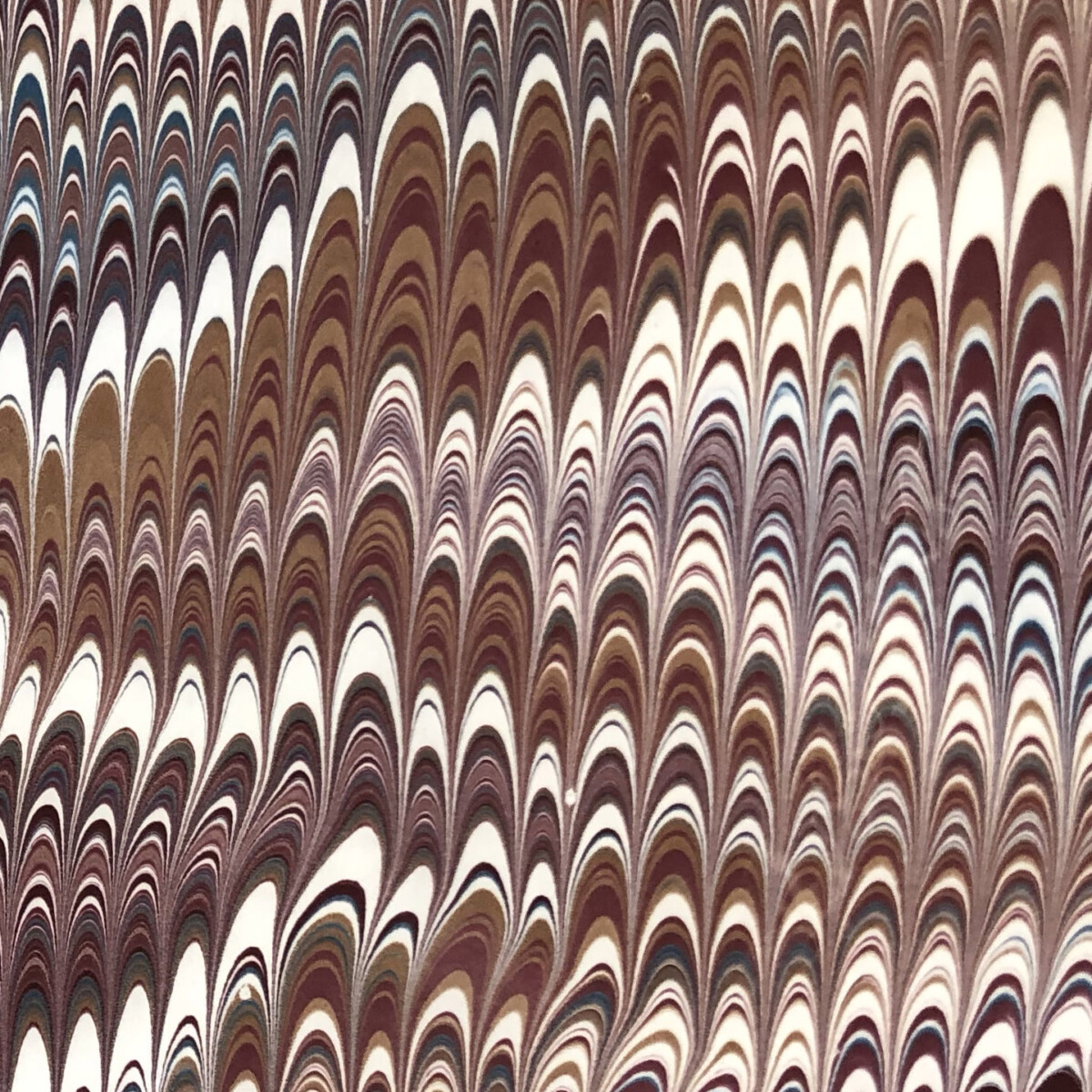
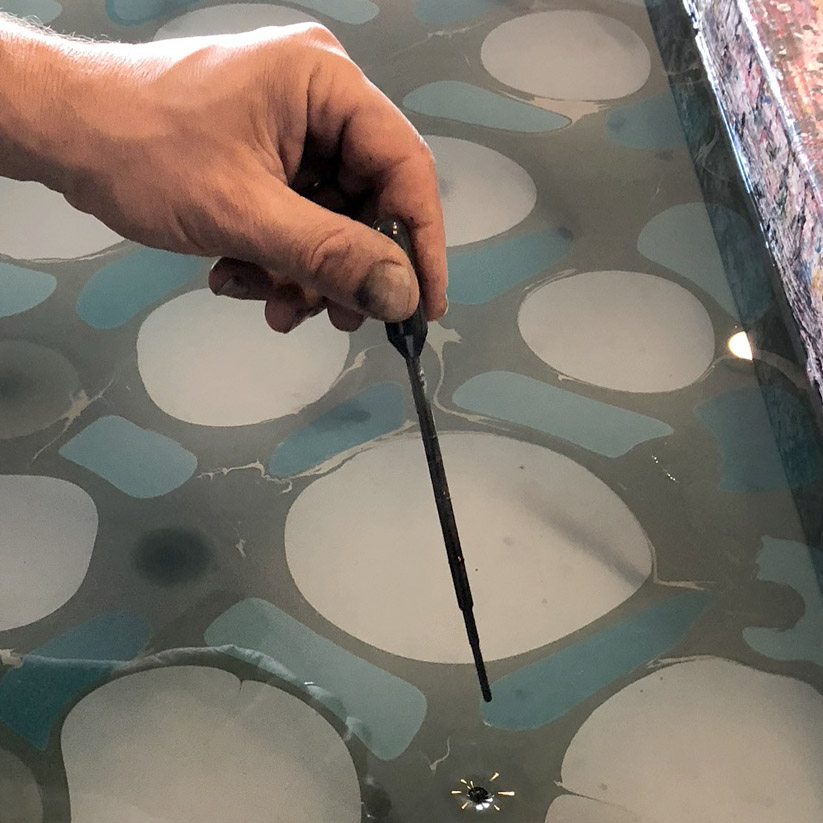
This workshop is designed to provide students with a space to explore more of the marbling universe. Further complex patterns will be demonstrated. This workshop is designed to provide students with a space to explore more of the marbling universe. Further complex patterns will be demonstrated. Students will learn how to make and use metallic paint. Students will execute some overmarbled paper, which are papers “printed” two times, creating complex visual patterns.
Continue ReadingPietro Accardi: Intro to Paper Marbling
In this introductory class, students will gain a basic understanding of the history, techniques, tools, and styles of Western marbling. We will talk about the color wheel and color theory to guide students’ creativity. Pietro will demonstrate how to execute the most classic patterns and how to create simple harmonic color combinations.
Continue ReadingRhiannon Alpers: Miniature Specimen Enclosure
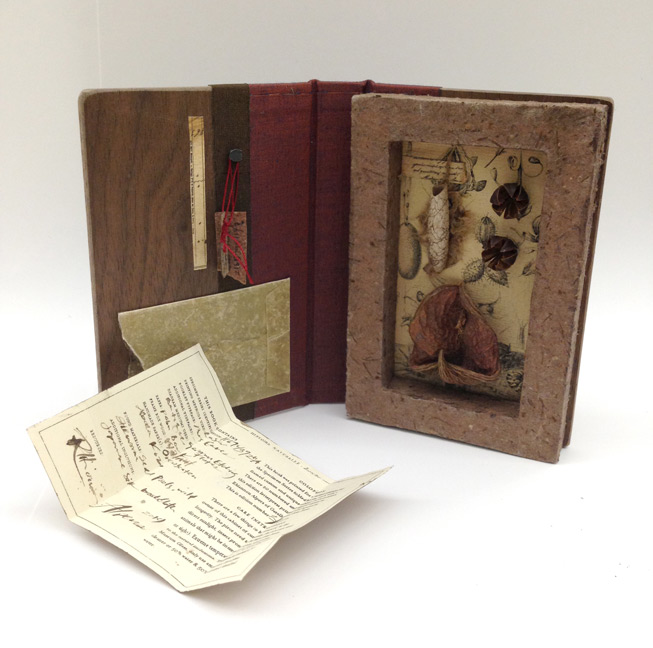
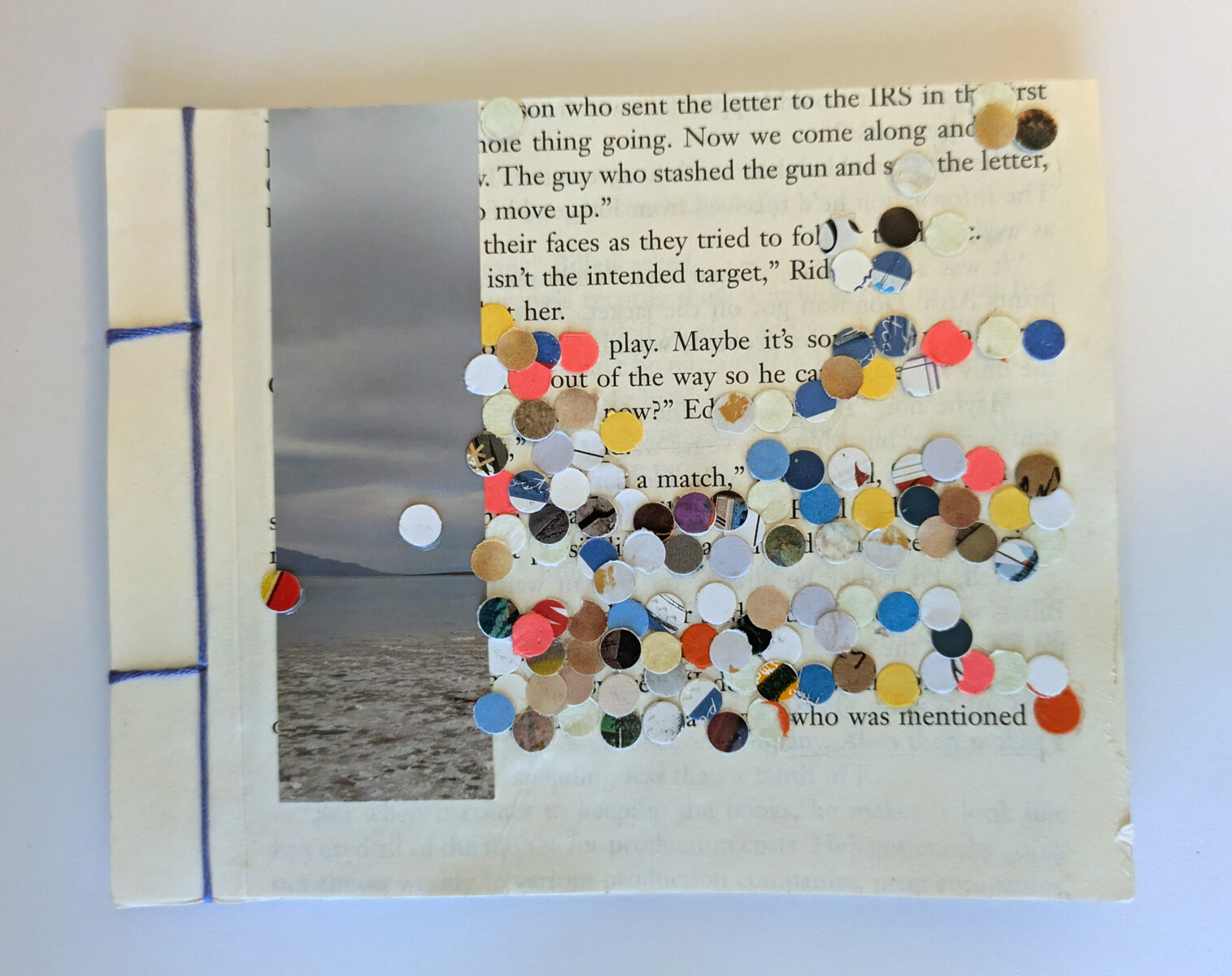
In this one-day beginner’s workshop, students will create a miniature hardcover book (3″ x 4½″ x ½″) designed to house a personal assemblage of natural curiosities. Using found objects, historic illustrations, altered book parts, and natural artifacts, participants will build a narrative through collage and layered materials.
Continue ReadingKit Davey: Pop-Up Tunnel Book
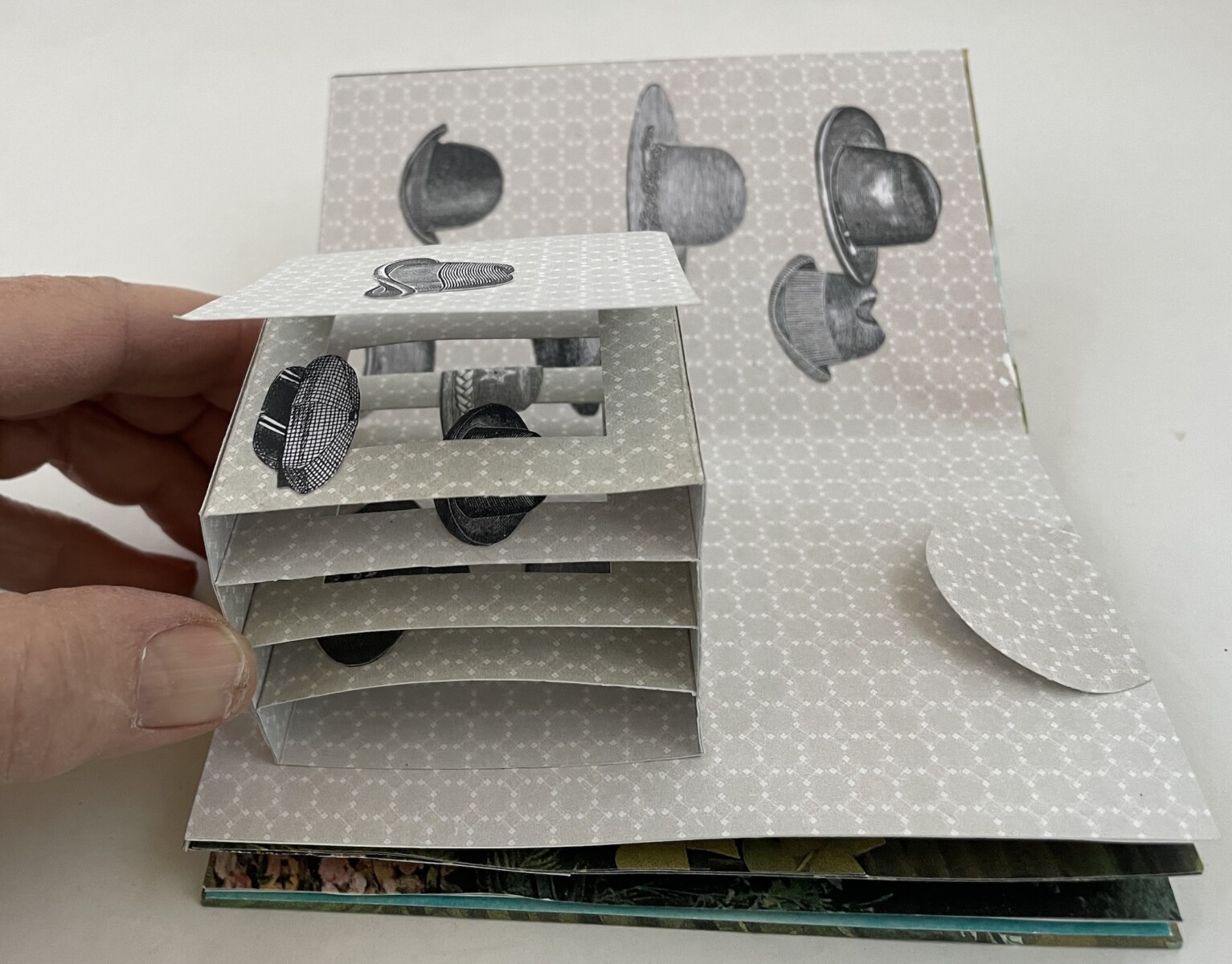
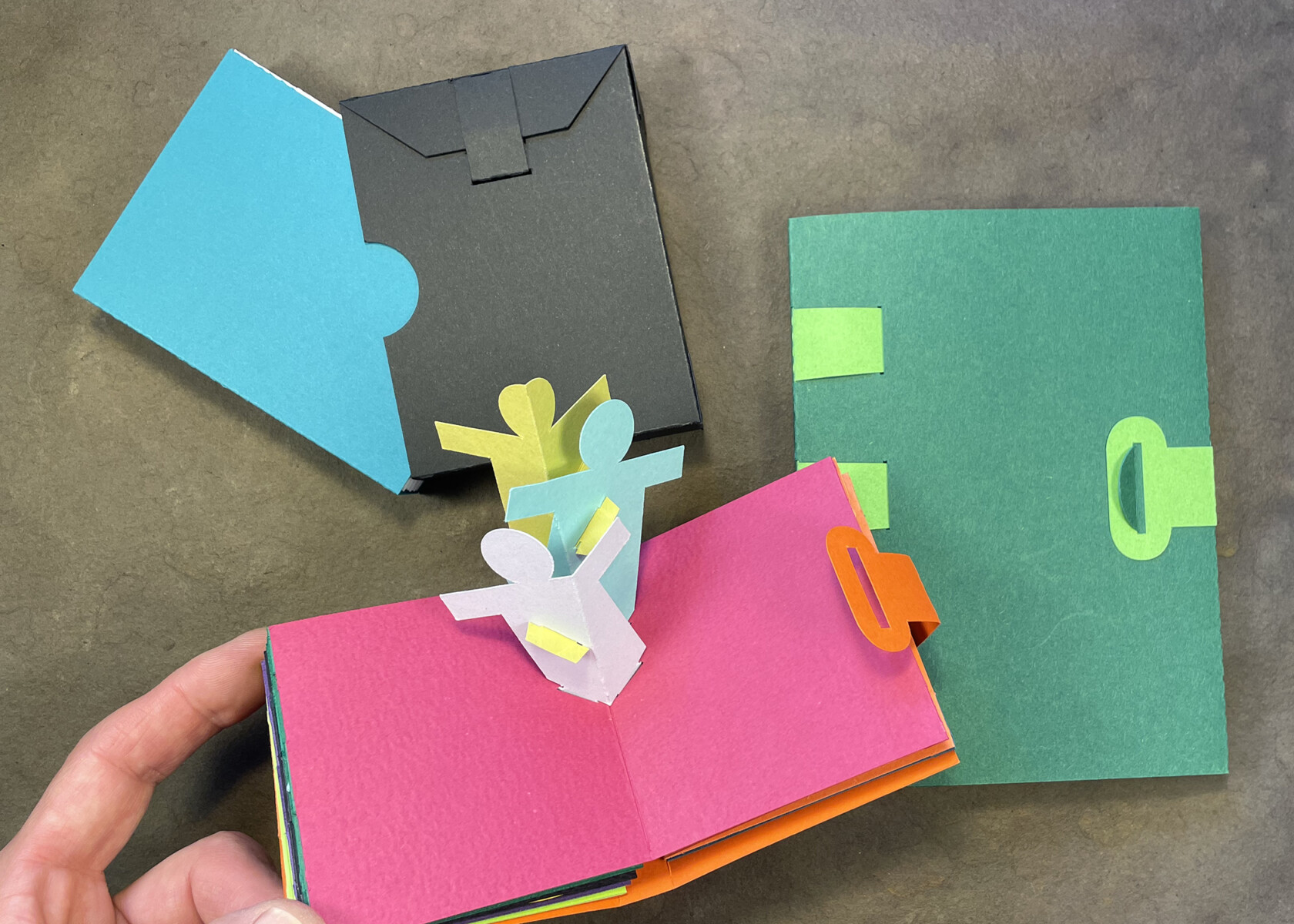
When the tab is lifted and the door is opened, the reader is treated to a multi-layered tunnel adorned with floating objects. Kit will guide students through making the tunnel frames, installing the floating images, and attaching the flattened tunnel to a backing page. Students will end up with an unusual, interactive, four-tunnel book, invented by Kit and shared with her students.
Continue ReadingKit Davey: Button Collection Book
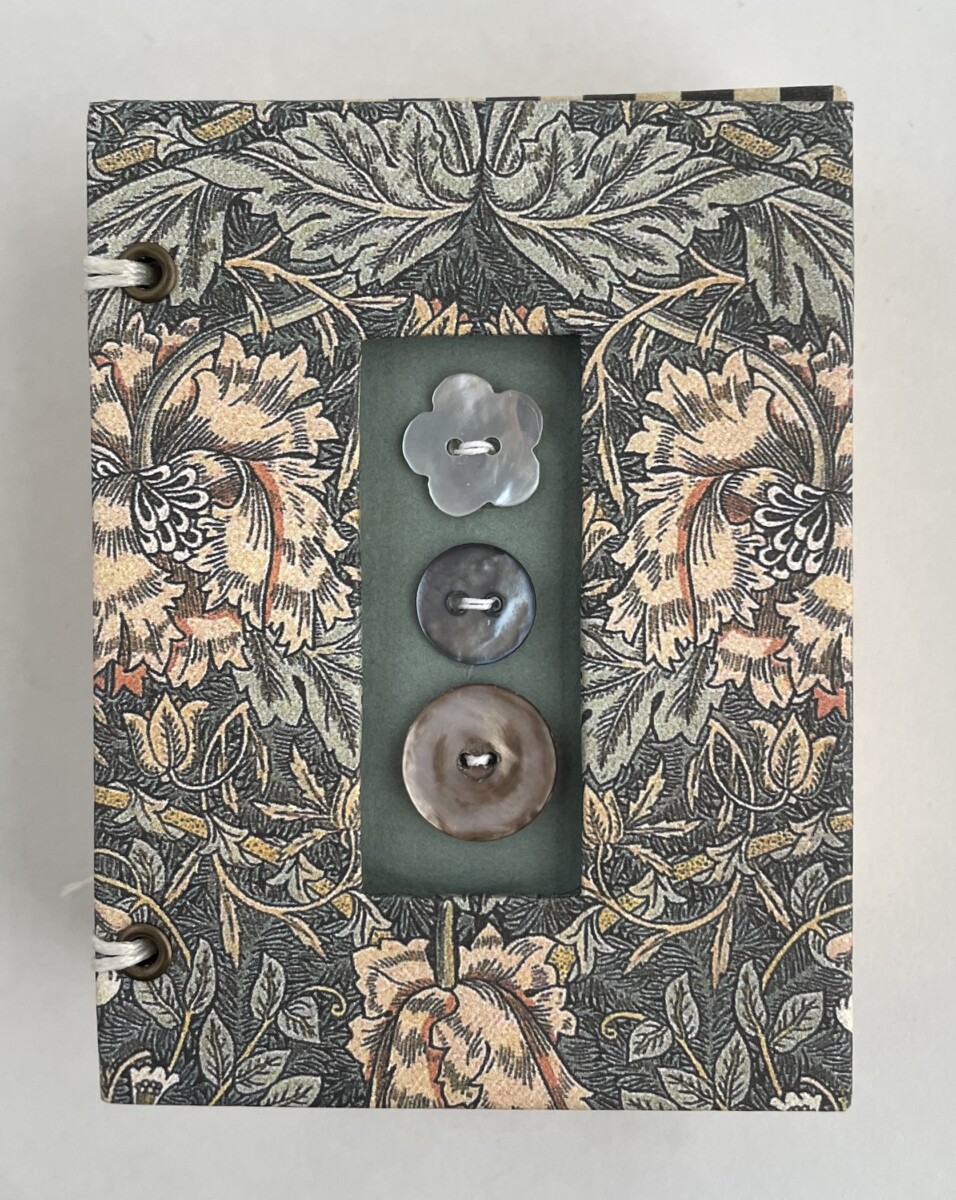
In this workshop, participants will combine their favorite buttons with coordinating papers to make a colorful, one-of-a-kind, five-page book. We will use foam core for the pages and cut niches into them. We’ll then cover the pages with our favorite papers (which coordinate with the style and color of our buttons). Then we’ll stitch our buttons onto a backing and install them into the niches. To protect the stitching holes we’ll use metal eyelets. Kit will teach the slip knot stitch so students can bind their pages together. Students will end up with a five-page book of buttons, preserved and displayed in a fun and unusual way.
Continue ReadingSelene Fisher: Playful Patterns in a Leporello Portfolio
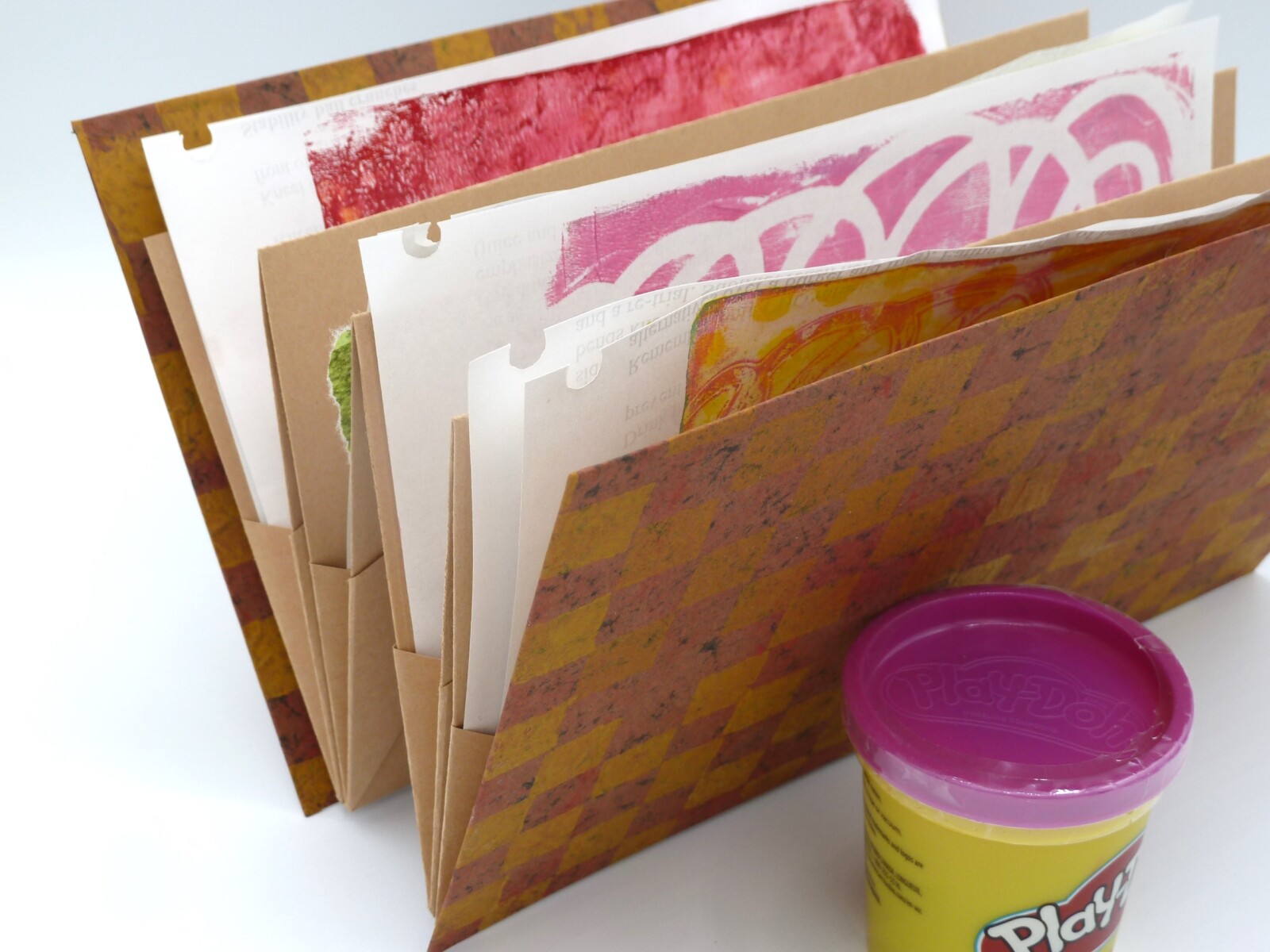
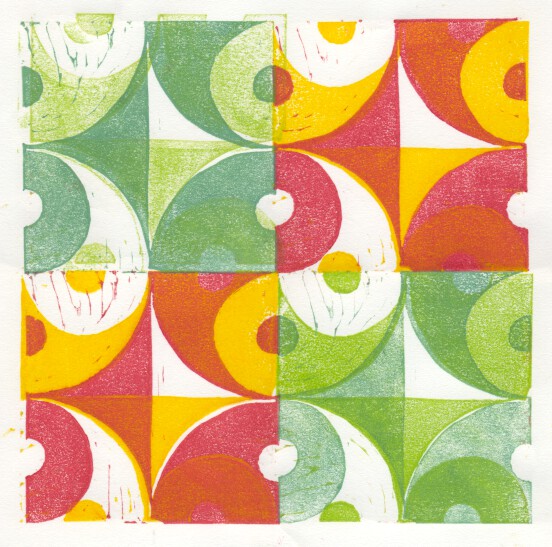
This class is all about creating colorful patterned paper (with a gel-printing plate) that can be used in other mixed-media projects. We’ll start off making a Leporello case to store smaller papers. This folder combines origami and bookbinding techniques to create a simple and effective structure. Then we will swing into color and pattern, using acrylic paint, gel plates, Play-Doh (seriously), foam stamps, stencils, different papers, and lots of textures! This is a chance to play with different methods of creating colorful papers for use in other projects. Students will leave with a collection of papers housed in their case, Play-Doh for future fun, and any stencils or stamps they create in class.
Continue ReadingSelene Fisher: Whimsical Little Houses All in a Row
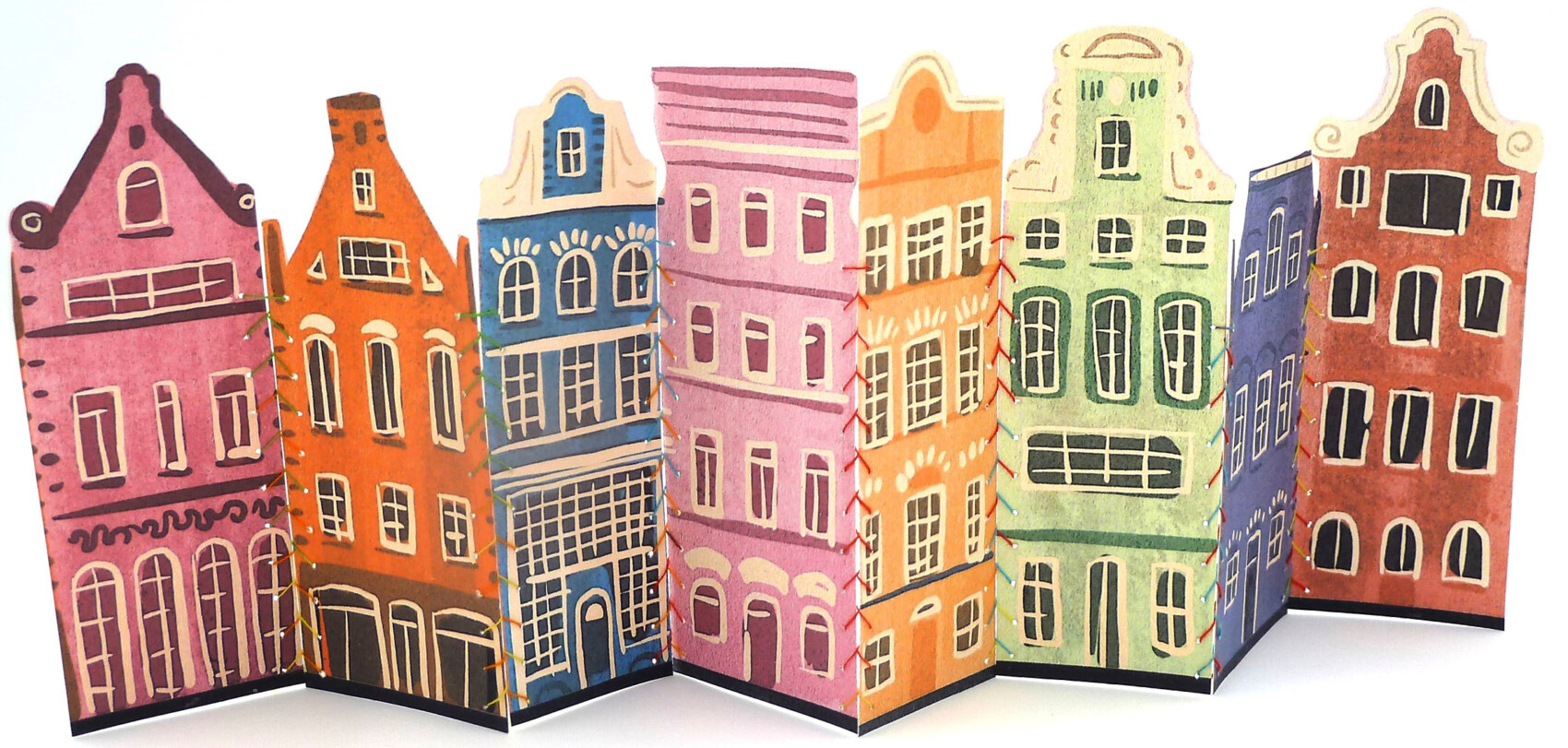
Are you charmed by the repeating shapes you see in lines of hillside houses? Are you intrigued by urban sketching? We’ll explore new neighborhoods by constructing our own little wonky row houses bound into a quirky accordion book.
Continue ReadingSelene Fisher: Ekphrastic Postcards in a Blizzard (Book)
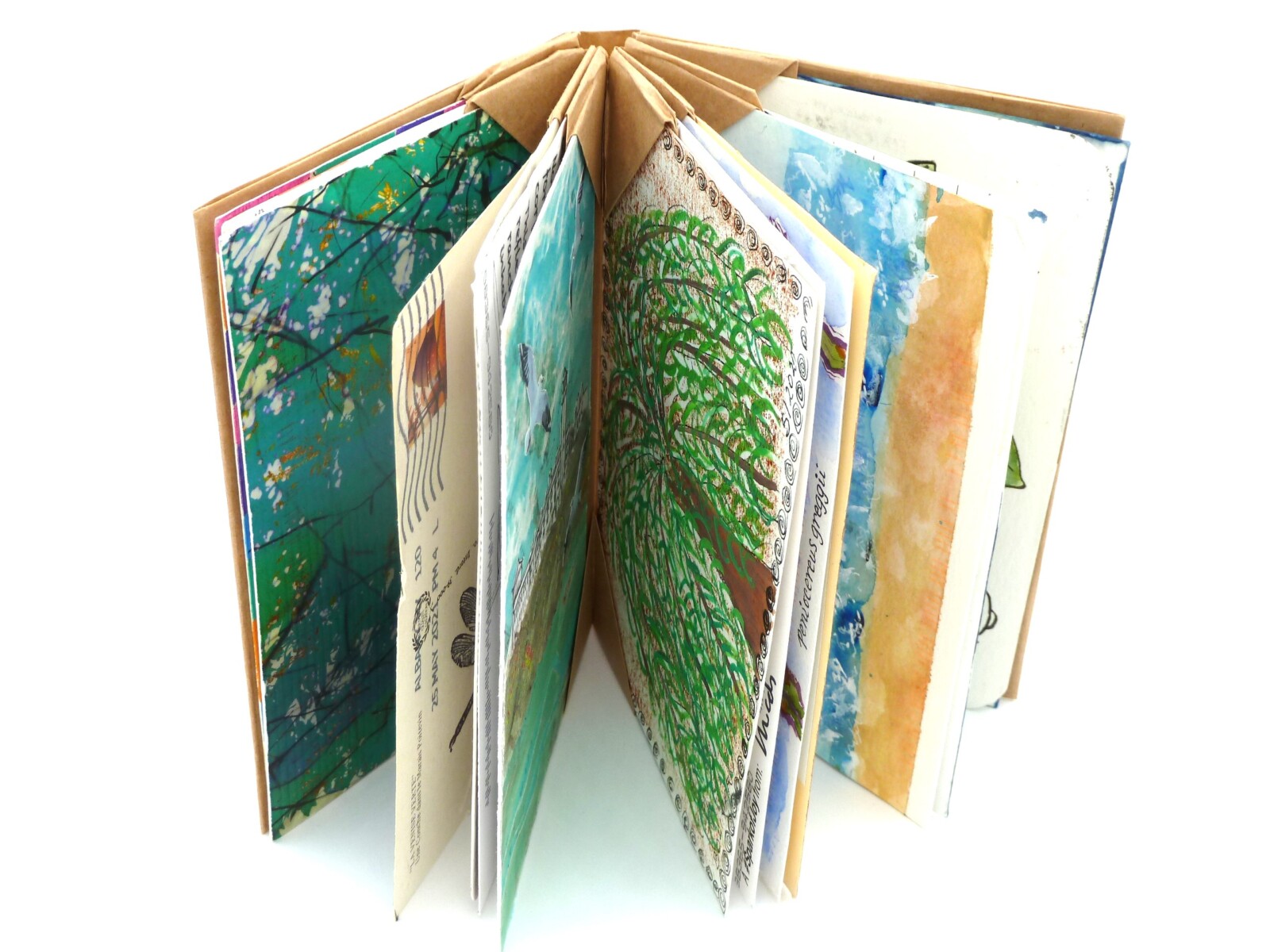
This class combines mixed-media collage, creative writing, an origami-inspired case, and a collaborative interchange with classmates.
Continue ReadingBrenda Gallagher: Mini Pencil Sketchbook
Bind your very own miniature sketchbook with leather covers. This little gem holds your mini colored pencils and fits in your pocket!
Continue ReadingHelen Hiebert: Fundamentals of Paper Weaving
Learn the basics of paper weaving while creating a woven-paper notecard and a cylindrical lantern with a woven hinge. Learn what papers are best for weaving, how to use a paper loom, how to weave with or without a weaving tool, and how to cut windows in your weavings to reveal and illuminate between the layers. Students will incorporate unique papers and imagery as they weave paper strips and shapes in a variety of ways.
Continue ReadingGenevieve Kaplan: Altered Pages and Blackout Poems—Working with Text
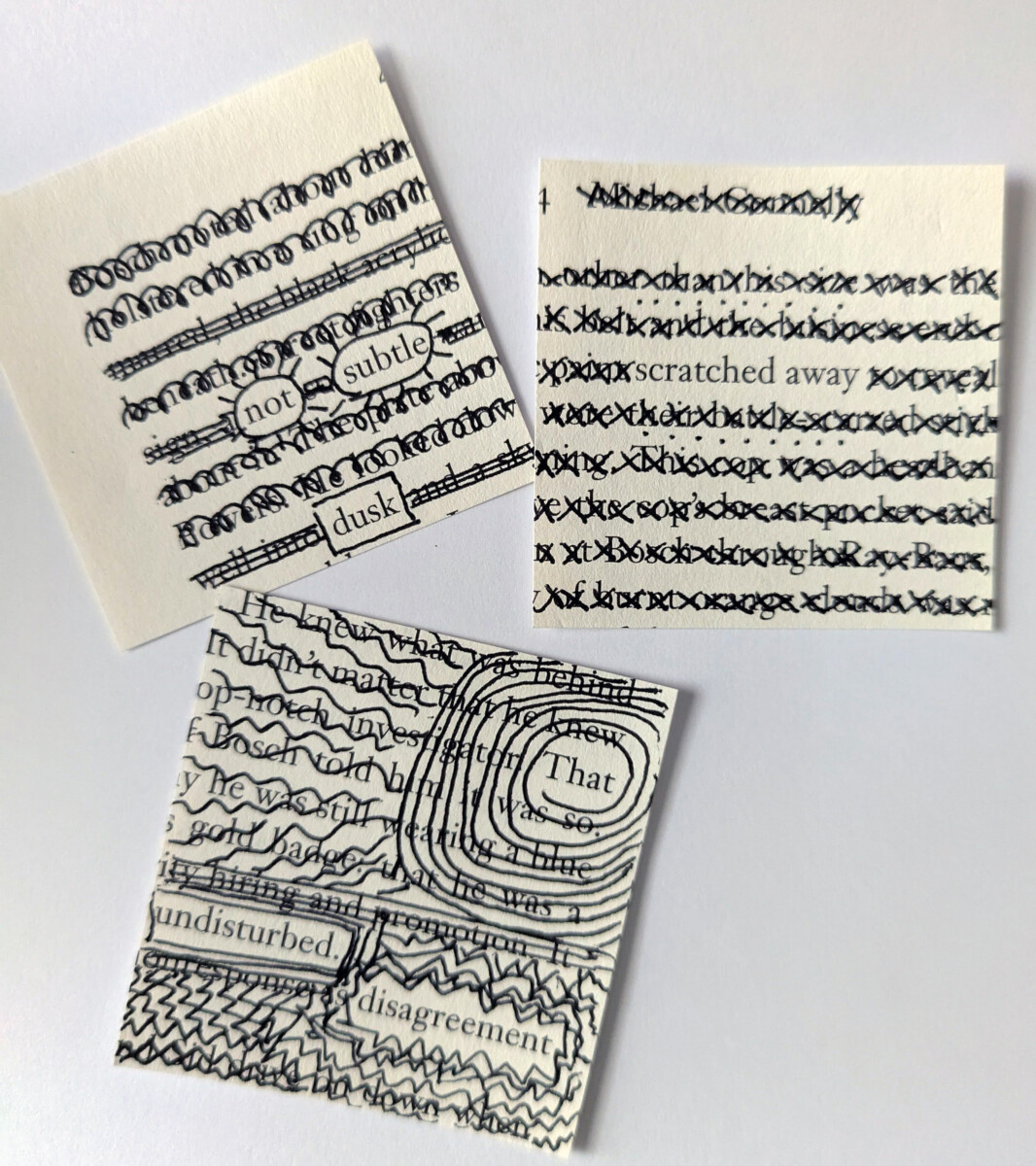
In this hands-on creative workshop, we will find our inspiration by excavating texts already written. Using pages torn from discarded books as our starting point, we will explore various physical and intellectual approaches to altering pages. From strike-through to pattern-making, black-out to collage, we’ll cover up, obscure, and reveal existing language to forge new ways of creating, experiencing, and reading. In this class, we will view and consider exciting examples of altered books and erasure poetry, getting inspiration from published works while we try our own hands at the techniques shown.
Continue ReadingGenevieve Kaplan: Creative Writing for Book Artists
During this generative writing workshop, we will brainstorm ideas, experiment with language, and tap into students’ linguistic creativity. We will consider contemporary examples of short literary works (poetry and short prose), and examine these texts from a writer’s (rather than just a reader’s) point of view. We will pay special attention to elements of craft—what these authors do, and how they do it—and use our observations to guide us in making our own creative authorial choices.
Continue ReadingGenevieve Kaplan: Altered Texts—Obscuring to Reveal
In this one-day workshop, perfect for all levels, students will follow a step-by-step process to create their own small book of engaging visual-literary erasure.
Continue ReadingRoberta Lavadour: Handmade Books in the Classroom
Teaching artists draw on a skill set that is distinctly different from day-to-day studio work. In this fast-paced session, we will look at tips and tricks for choosing grade-appropriate projects, preparing materials, and working with large groups of students who bring different learning styles to the classroom.
Continue ReadingAbigail Merickel: Decorative Block Design
Learn about the seven simple design motifs found on all decorative arts in various world cultures. Students will use a pen and paper in a guided drawing exercise that will help them experiment freely with these motifs to create their own decorative design, which will be made into a block-print stamp.
Continue ReadingAbigail Merickel: Solar Plate Etching and Monotype
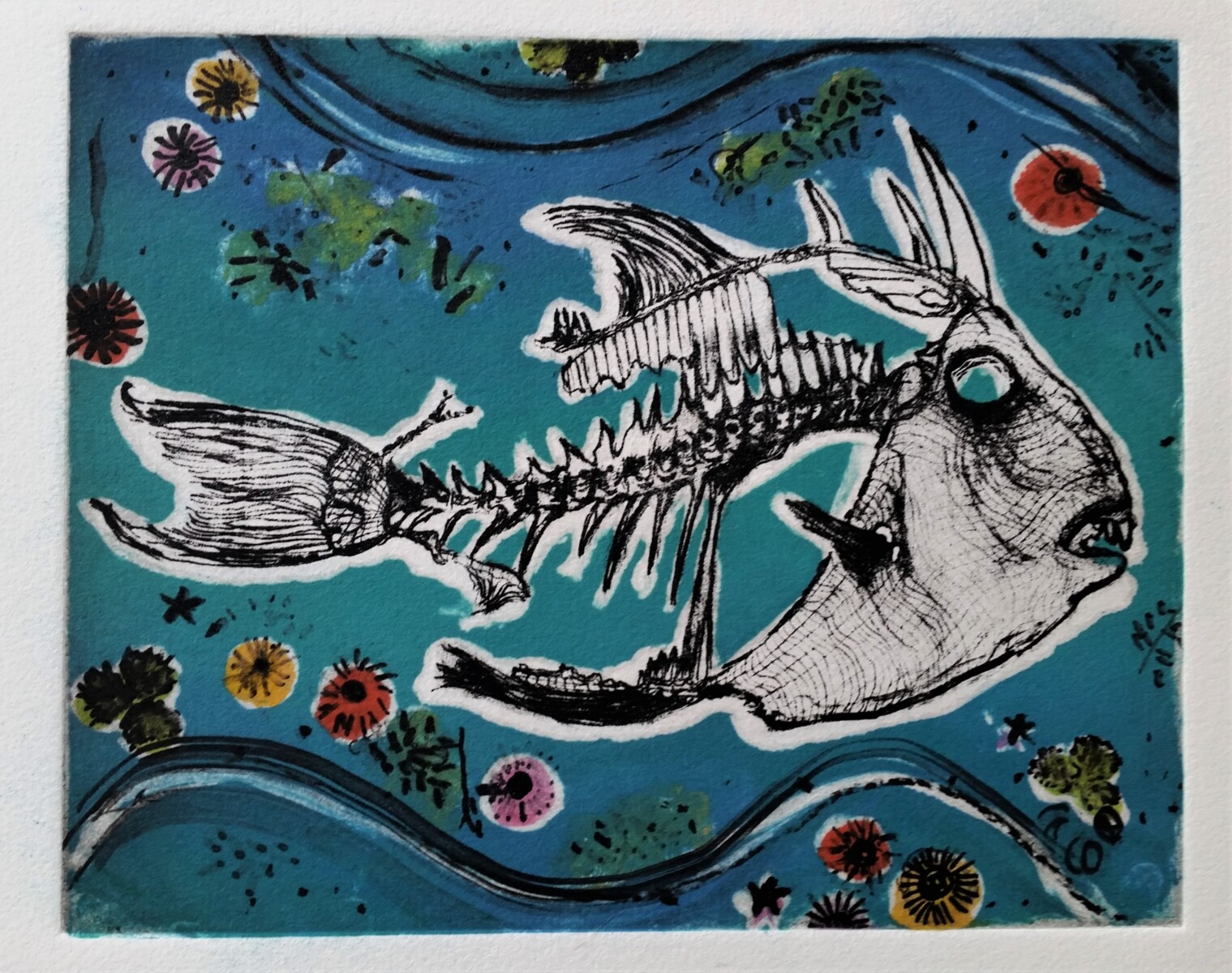
Solar plate etching is a form of intaglio in which a photosensitive polymer plate is used. A drawing on trace film is placed on the plate, which is exposed to light and developed in water. Ink is rubbed into the etched lines and printed onto paper.
Continue ReadingCasey Newman: Indigo Dyeing Fabric
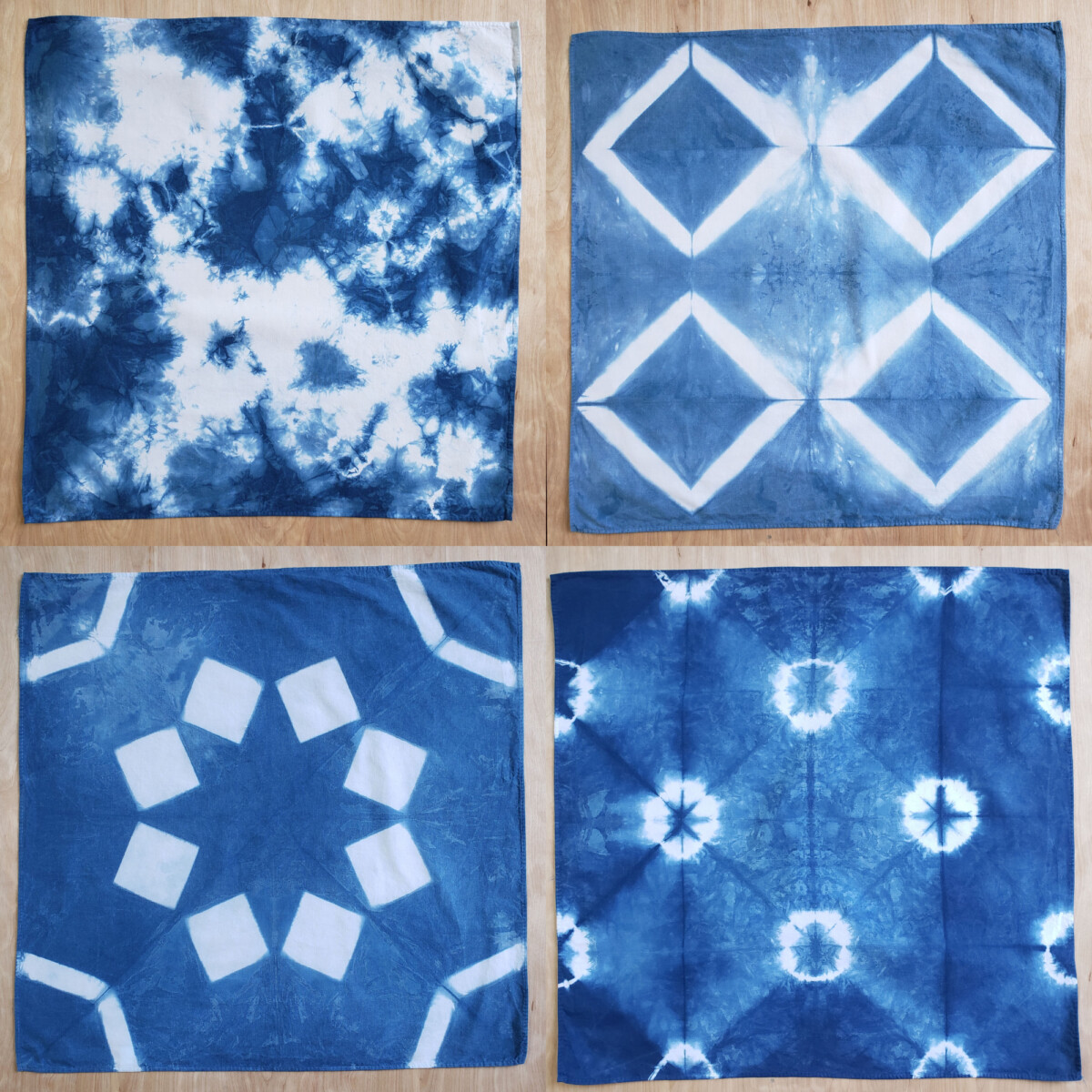
In this workshop we will create and use an indigo dye vat, unlocking the mysteries of this blue pigment that has been used throughout the world for centuries. Students will learn the basics of Shibori dyeing, a Japanese technique of folding and binding fabric to create beautiful patterns with indigo dye. There are infinite ways to manipulate fabric to create unique designs.
Continue ReadingCasey Newman: Indigo Dyeing Paper
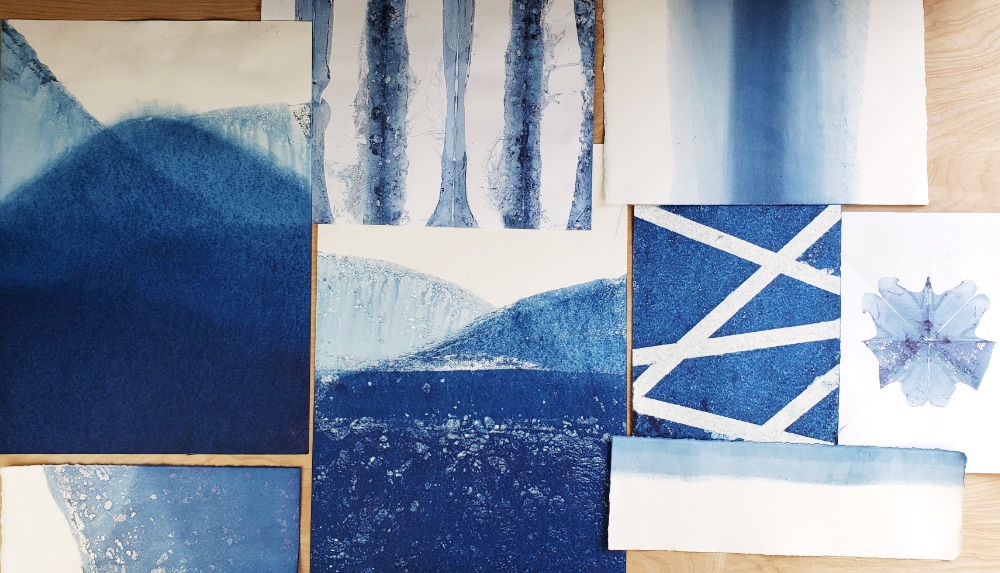
In this workshop students will create and use an indigo dye vat to dye paper beautiful shades of blue. Students will learn how to create an indigo dye vat and see what depth of shade can be created through dip-dyeing paper. This technique can create both solid and layered/ombre designs. Students will learn ways to fold and bend paper to create different designs and will be able to try numerous techniques.
Continue ReadingCasey Newman: Botanical Inks
Making one’s own natural ink not only yields beautiful and interesting colors with which to create, but provides a deep connection to the natural world. It’s also just really fun! In this workshop, students will learn to extract color from a variety of natural materials, many that are easy to find in the garden or even the kitchen. Students will learn which materials can be added to modify colors so they can create several colors from each dye source.
Continue ReadingShawn Sheehy: A Trio of No-Glue Structures
A bonefolder, a microspatula, and tweezers. Those three tools—and a little time—are all students will need to assemble this deceptively simple trio of no-glue, no-thread books. But despite their simplicity, these structures are elegant, flexible, and altogether ready for further play and experimentation.
Continue Reading